CES 2026 winners and losers
CES 2026 was my 16th show. I've been going long enough that CES navigation no longer gives me any trouble...Iong enough to remember when Blackberry making a CES announcement was still kind of a big deal.
So, what was hot, or not, at CES 2026? Well...
Winner: CES 2026
Calling the death of conventions is favorite past time for tech journalists, and hey, sometimes they really do die. But CES 2026? Not at all.
We'll have to wait to hear the official attendance figure, but I reckon it won't be much different from prior years. The show floor was busy and the venue, of which there's plenty, was populated.
Winner: Intel
My perspective is skewed of course, because I cover PC laptops, desktops, and peripherals most frequently of all. But from where I sit, Intel had an amazing show.
This was thanks to the launch of Panther Lake, better known as Intel Core Series 3. Panther Lake is a new chip architecture that uses Intel's own 18A production process and includes Intel's Arc graphics.
Intel has the most "design wins" at the show, meaning it appeared in the most new devices from PC makers like Lenovo, Asus, and Dell.
And to my surprise, Panther Lake was extremely successful in pushing aside Intel's newest rival...
Loser: Qualcomm
I was shocked by how badly Qualcomm got thrashed at CES 2026.
The company's new Snapdragon X2 chips, announced at an event in September of 2025, look great on paper.
Yet Qualcomm racked up very few design wins at CES 2026.
There were a some exceptions, like the Asus Zenbook A16, a beautiful laptop that will have Qualcomm's Snapdragon X2 Elite Extreme inside. But they were few in number.
There's a lot of reasons for this, and maybe I'll explore them in a different post.
But Intel is the path of least resistance. If it can provide even a competitive chip to PC makers, it will win by default. And Intel appears to have cleared the bar.
Winner: Nvidia
Nvidia's CES 2026 keynote was dense and entirely focused on AI. It didn't have any big consumer announcements (it did announce DLSS 4.5 and Nvidia Pulsar display technology, but both don't count as "big" in my book).
But nothing happened to threaten Nvidia, either.
Actually, there was one exception. I noticed that a few laptops, such as Dell's new XPS 14 and XPS 16, ditched Nvidia discrete graphics for Intel integrated graphics. Apparently, PC makers feel Intel's best IGP is competitor with entry-level Nvidia GPUs, like the RTX 4050 and 5050.
However, that's a minor point. The more significant point is that AMD didn't bring anything new to rival Nvidia. I didn't see any AMD design wins on the laptop graphics side, and AMD didn't launch a new GPU architecture or refresh.
And you know where that leads us.
Loser: AMD
AMD had a great CES 2025. It announced new APUs including Strix Halo, which provided excellent integrated graphics and a unified memory design that could address up to 128GB of memory. This was flanked by many design wins—laptops, in particular
But AMD wasn't able to maintain the moment at CES 2026. It did announce a architecture refresh, Gorgon Point, but the improvements are very minor. And as mentioned, it didn't have a new GPU architecture or refresh.
I expect this will be a speed bump, but it does stress the fact AMD can't take its foot off the gas.
Winner: Samsung
Samsung announced its 5th-generation QD-OLED technology for monitors at CES 2026. This includes a new sub-pixel arrangement that provides better text clarity, plus higher HDR brightness.
LG had its own response with new tandem OLED panels that offer similar improvements. But Samsung already has the lead here, and so far as I can see, LG's tandem OLED is only enough to keep up with Samsung's QD-OLED.
Certainly, QD-OLED appears to be the most popular choice in monitors and laptops.
It's a different story in TV, perhaps, which I am less familiar with, but there too Samsung is now at least competitive with LG.
Loser: HP
HP often has a demure presence at CES, and CES 2026 was no exception.
There was some news. HP rebranded its gaming line, placing Omen under HyperX, a gaming peripheral brand that HP owns. HyperX is probably better known than Omen, so I suppose it makes sense.
However, nothing I saw from HP truly stood out. They had a laptop with a 300-watt total design power, a new height. But MSI had one, too. And HP's other laptops, though competent, didn't seem remarkable.
Winner: Dell
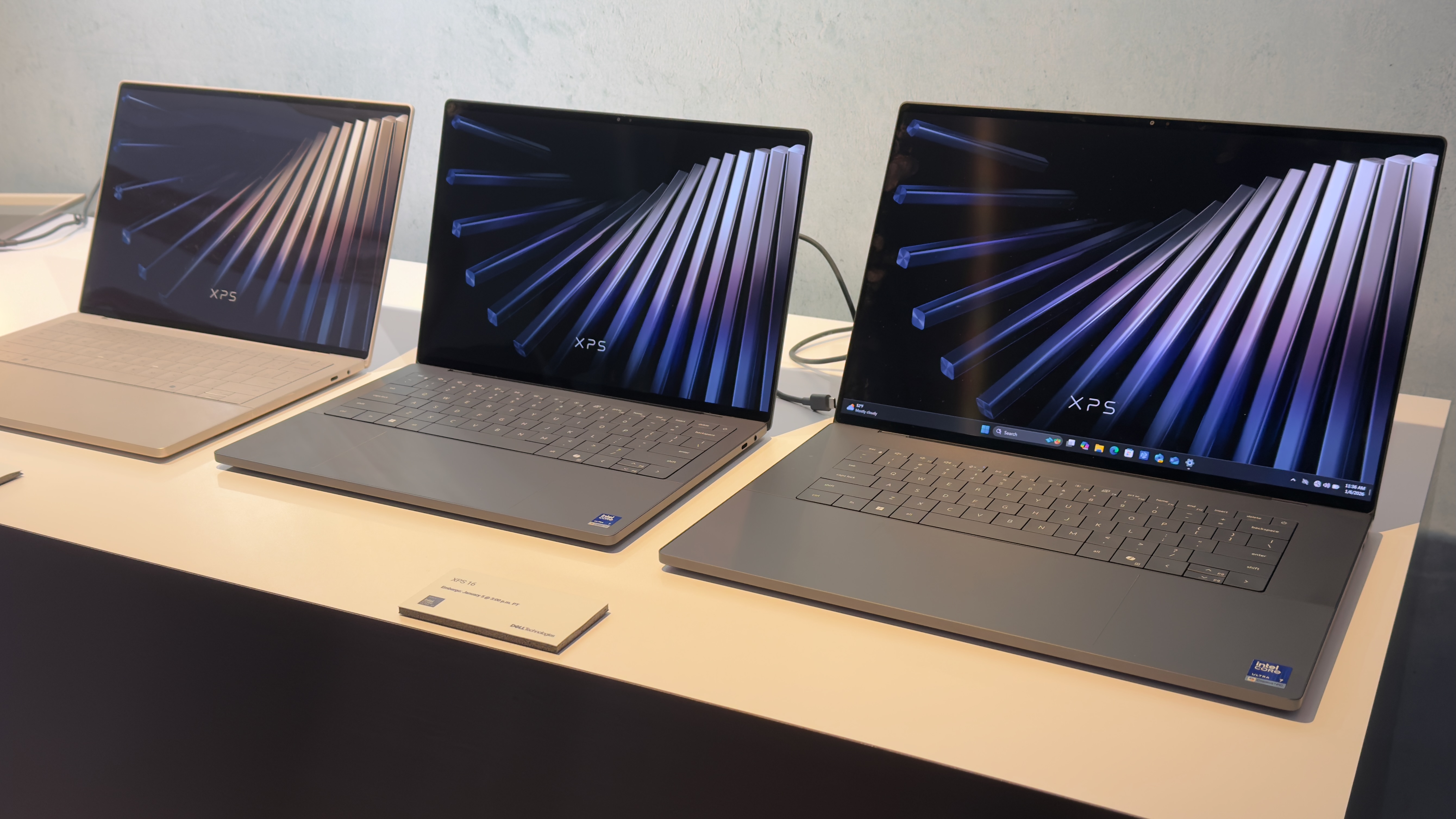
Dell was back at CES 2026, after several years away from the show. And it also re-introduced the XPS line after couple years trying, and failing, to get people excited for the new Dell Premium and Pro branding.
Mostly, CES 2026 was a healing of self-inflicted wounds. But Dell's new hardware looks excellent, and if it can manage to avoid any unforced errors, the new XPS laptops could again be class-leading machines.
Winner: Lenovo
Lenovo brought many new laptops to CES 2026, but that's not why I think it was a winner.
No, credit for that goes to the Lenovo Tech World event at the Las Vegas Sphere.
Was it marketing hype? Absolutely. But as marketing hype goes, it was very hype—it even ended with a Gwen Stefani concert.
Lenovo is already the world market leader in PC sales, but that doesn't seem to have satisfied the company's ambitions.
Loser: Consumers
As you may have heard, there's a lot of price pressure on consumer electronics right now. Tariffs, increasingly unstable world shipping, and surging memory prices (due to demand from AI data centers) are causing a serious crunch.
That was evident at CES 2026. May companies did not list prices for their new laptops. Those that did, such as Lenovo, generally announced prices above $1,000. Only a handful of laptops or desktops were announced with an MSRP below $1,000.
What I wrote at CES 2026
I wrote mostly for PC World and Micro Center at this year's show, and focused on Lenovo in particular.
PC World's best laptops of CES 2026 PC World's best monitors of CES 2026
Lenovo swings big at CES 2026 with weird and experimental designs
Lenovo’s new ThinkPad X1 Carbon is ‘more repairable’ — with a catch